

Where Do Plants And Animals Get Their Energy
Learning Objectives
- Distinguish essential, beneficial, macro- and micro-nutrient requirements for plants and animals
- Predict the symptoms of nutrient deficiencies in plants and animals
- Describe the diversity of adaptations for acquisition of nutrients in plants and animals
Living Cells Need Materials to Grow: Nutrients
The information below was adjusted from OpenStax Biology 22.iii, OpenStax Biology 23.two, and OpenStax Biology 24.1
Macronutrients
Cells are substantially a well-organized assemblage of macromolecules and h2o. Call up that macromolecules are produced by the polymerization of smaller units called monomers. For cells to build all of the molecules required to sustain life, they need certain substances, collectively called nutrients. When prokaryotes grow, they obtain their nutrients from the environment. Nutrients that are required in big amounts are called macronutrients, whereas those required in smaller or trace amounts are called micronutrients. Simply a handful of elements are considered macronutrientsâ€"carbon, hydrogen, oxygen, nitrogen, phosphorus, and sulfur. (A mnemonic for remembering these elements is the acronym CHONPS.)
Why are these macronutrients needed in big amounts? They are the components of organic compounds in cells, including water. Carbon is the major chemical element in all macromolecules: carbohydrates, proteins, nucleic acids, lipids, and many other compounds. Carbon accounts for about 50 per centum of the composition of the cell. Nitrogen represents 12 percent of the total dry weight of a typical cell and is a component of proteins, nucleic acids, and other cell constituents. Well-nigh of the nitrogen available in nature is either atmospheric nitrogen (Due north2) or another inorganic form. Diatomic (N2) nitrogen, however, tin can be converted into an organic form just by certain organisms, chosen nitrogen-fixing organisms. Both hydrogen and oxygen are part of many organic compounds and of water. Phosphorus is required past all organisms for the synthesis of nucleotides and phospholipids. Sulfur is part of the structure of some amino acids such every bit cysteine and methionine, and is also present in several vitamins and coenzymes. Other important macronutrients are potassium (Thou), magnesium (Mg), calcium (Ca), and sodium (Na). Although these elements are required in smaller amounts, they are very important for the structure and function of the prokaryotic jail cell.
Micronutrients
In addition to these macronutrients, prokaryotes require various metallic elements in small amounts. These are referred to as micronutrients or trace elements. For case, fe is necessary for the function of the cytochromes involved in electron-send reactions. Some prokaryotes require other elementsâ€"such as boron (B), chromium (Cr), and manganese (Mn)â€"primarily as enzyme cofactors.
Nutritional Needs and Adaptations in Plants
The information below was adjusted from OpenStax Biology 31.i, OpenStax Biology 31.ii, and OpenStax Biology 31.three
Essential Nutrients
Plants crave just light, water and about twenty elements to back up all their biochemical needs: these 20 elements are called essential nutrients. For an chemical element to be regarded as essential, 3 criteria are required: 1) a institute cannot complete its life cycle without the chemical element; 2) no other chemical element can perform the function of the element; and 3) the element is directly involved in constitute nutrition.
| Essential Elements for Establish Growth | |
|---|---|
| Macronutrients | Micronutrients |
| Carbon (C) | Iron (Atomic number 26) |
| Hydrogen (H) | Manganese (Mn) |
| Oxygen (O) | Boron (B) |
| Nitrogen (N) | Molybdenum (Mo) |
| Phosphorus (P) | Copper (Cu) |
| Potassium (Chiliad) | Zinc (Zn) |
| Calcium (Ca) | Chlorine (Cl) |
| Magnesium (Mg) | Nickel (Ni) |
| Sulfur (S) | Cobalt (Co) |
| Sodium (Na) | |
| Silicon (Si) | |
Macronutrients and Micronutrients
The essential elements can be divided into two groups: macronutrients and micronutrients. Nutrients that plants require in larger amounts are called macronutrients. Virtually half of the essential elements are considered macronutrients: carbon, hydrogen, oxygen, nitrogen, phosphorus, potassium, calcium, magnesium and sulfur. The kickoff of these macronutrients, carbon (C), is required to class carbohydrates, proteins, nucleic acids, and many other compounds; it is therefore present in all macromolecules. On average, the dry weight (excluding h2o) of a cell is l percent carbon. Equally shown below, carbon is a primal role of constitute biomolecules.
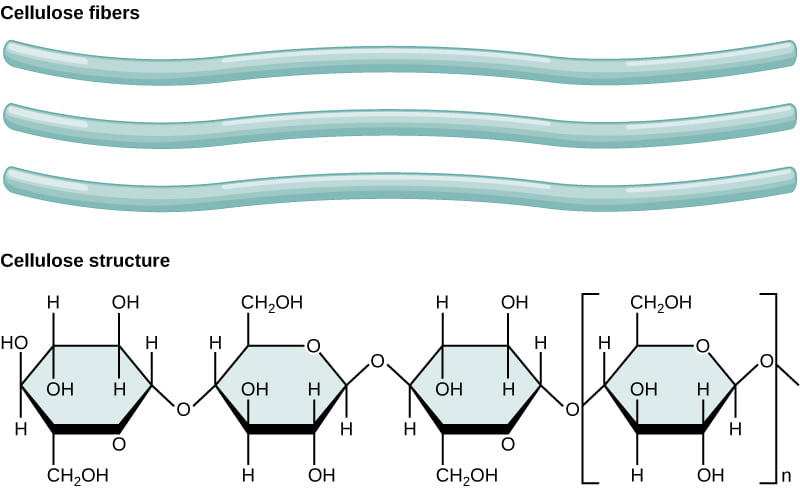
Three cellulose fibers and the chemical structure of cellulose is shown. Cellulose consists of unbranched chains of glucose subunits that course long, straight fibers.
Cellulose, the chief structural component of the plant cell wall, makes upwards over thirty per centum of plant matter. Information technology is the virtually abundant organic compound on globe. Plants are able to brand their ain cellulose, but need carbon from the air to practise and then.
The next most arable element in plant cells is nitrogen (N); information technology is part of proteins and nucleic acids. Nitrogen is also used in the synthesis of some vitamins. While there is an overwhelming amount of nitrogen in the air (79% of the temper is nitrogen gas), the nitrogen in the air is non biologically bachelor due to the triple bail between the nitrogen atoms. Only a few species of bacteria are capable of "fixing" nitrogen to brand it bioavailable; thus nitrogen is often a limiting cistron for establish growth.
Phosphorus (P), another macromolecule, is necessary to synthesize nucleic acids and phospholipids. As part of ATP, phosphorus enables nutrient energy to exist converted into chemic energy through oxidative phosphorylation. Likewise, light energy is converted into chemic energy during photophosphorylation in photosynthesis, and into chemical energy to be extracted during respiration. Phosphorous is typically available in a class that is non readily taken up by plant roots; the course that is bioavailable is present in small quantities and speedily "fixed" into the bioavailable form once once more. Phosphorus is therefore frequently a limiting gene for institute growth.
Potassium (K) is important because of its role in regulating stomatal opening and endmost. Equally the openings for gas exchange, stomata aid maintain a healthy h2o balance; a potassium ion pump supports this procedure. Potassium may exist present at low concentrations in some types of soil, and it is the third near common limiting factor for plant growth.
Other essential macronutrients: Hydrogen and oxygen are macronutrients that are part of many organic compounds, and also course water. Oxygen is necessary for cellular respiration; plants use oxygen to store energy in the form of ATP. Sulfur is part of certain amino acids, such as cysteine and methionine, and is present in several coenzymes. Sulfur also plays a role in photosynthesis as part of the electron transport chain, where hydrogen gradients play a key function in the conversion of light energy into ATP.
Magnesium (Mg) and calcium (Ca) are as well important macronutrients. The role of calcium is twofold: to regulate food transport, and to support many enzyme functions. Magnesium is important to the photosynthetic process. These minerals, along with the micronutrients, which are described below, also contribute to the plant’south ionic balance.
In add-on to macronutrients, organisms crave various elements in small amounts. These micronutrients, or trace elements, are nowadays in very pocket-sized quantities. They include boron (B), chlorine (Cl), manganese (Mn), iron (Fe), zinc (Zn), copper (Cu), molybdenum (Mo), nickel (Ni), silicon (Si), and sodium (Na).
Deficiencies in any of these nutrients, specially the macronutrients, can adversely bear on plant growth. Depending on the specific food, a lack can cause stunted growth, tedious growth, or chlorosis (yellowing of the leaves). Extreme deficiencies may consequence in leaves showing signs of cell death.
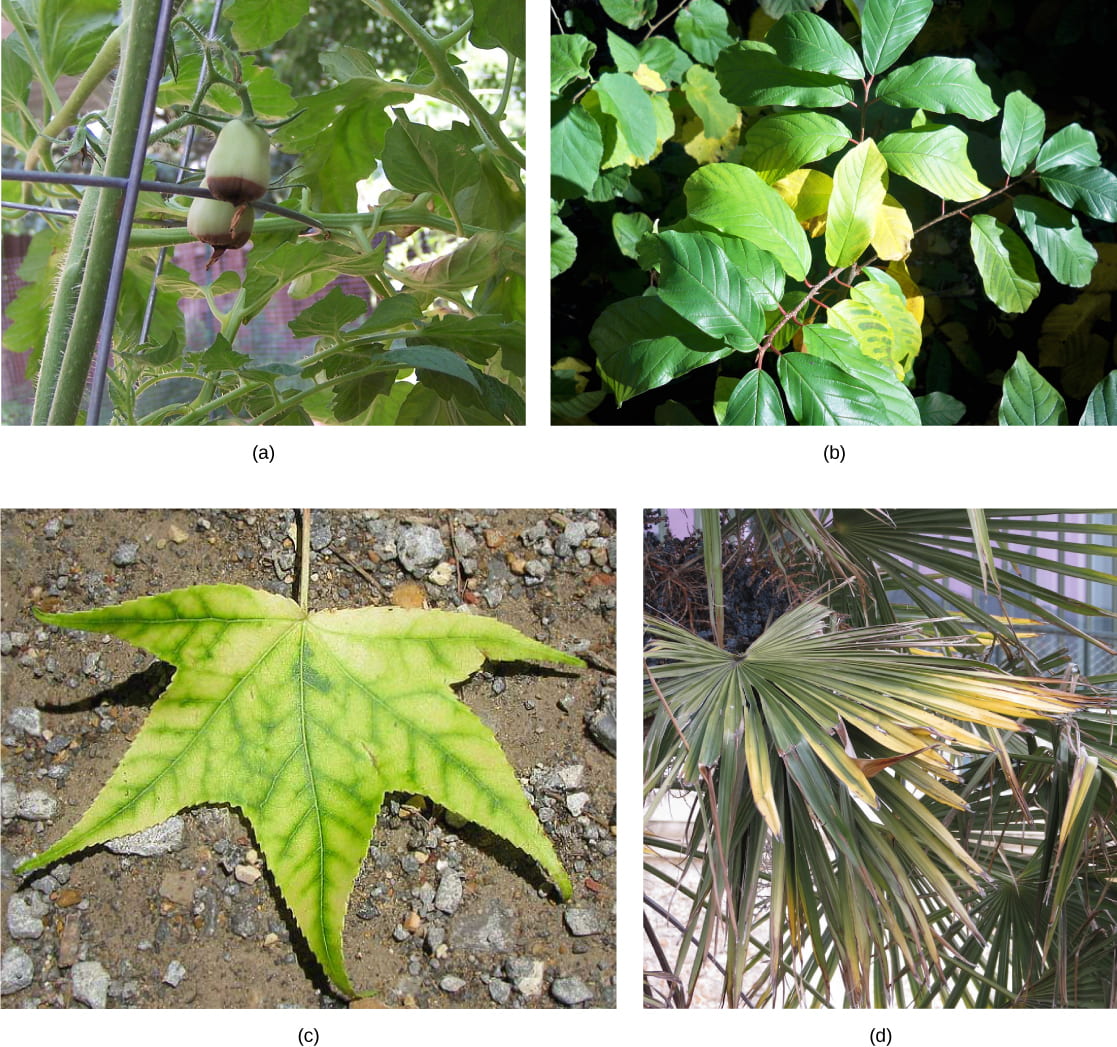
Photo (a) shows a tomato plant plant with two dark-green lycopersicon esculentum fruits. The fruits have turned nighttime brown on the bottom. Photograph (b) shows a plant with green leaves; some of the leaves have turned yellowish. Photo (c) shows a v-lobed foliage that is yellow with greenish veins. Photograph (d) shows greenish palm leaves with xanthous tips. Nutrient deficiency is axiomatic in the symptoms these plants testify. This (a) grape lycopersicon esculentum suffers from flower end rot caused by calcium deficiency. The yellowing in this (b) Frangula alnus results from magnesium deficiency. Inadequate magnesium also leads to (c) intervenal chlorosis, seen hither in a sweetgum leaf. This (d) palm is afflicted by potassium deficiency. (credit c: modification of piece of work by Jim Conrad; credit d: modification of piece of work past Malcolm Manners)
Plants obtain inorganic elements from the soil, which serves as a natural medium for state plants. Soil is the outer loose layer that covers the surface of World. Soil quality is a major determinant, along with climate, of institute distribution and growth. Soil quality depends non merely on the chemical limerick of the soil, but also the topography (regional surface features) and the presence of living organisms. In agriculture, the history of the soil, such equally the cultivating practices and previous crops, modify the characteristics and fertility of that soil.
Plants obtain food in two unlike means. Autotrophic plants can brand their own food from inorganic raw materials, such every bit carbon dioxide and water, through photosynthesis in the presence of sunlight. Green plants are included in this group. Some plants, however, are heterotrophic: they are totally parasitic and lacking in chlorophyll. These plants, referred to as holo-parasitic plants, are unable to synthesize organic carbon and depict all of their nutrients from the host plant.
Plants may also benefit from microbial partners in nutrient conquering. Particular species of bacteria and fungi have co-evolved along with sure plants to create a mutualistic symbiotic human relationship with roots. This improves the diet of both the plant and the microbe. The formation of nodules in legume plants and mycorrhization can be considered among the nutritional adaptations of plants. Yet, these are not the only type of adaptations that nosotros may find; many plants have other adaptations that allow them to thrive under specific conditions.
Nutrients from Other Sources
Some plants cannot produce their own food and must obtain their diet from exterior sources. This may occur with plants that are parasitic or saprophytic. Some plants are mutualistic symbionts, epiphytes, or insectivorous.
Parasitic Plants
A parasitic plant depends on its host for survival. Some parasitic plants accept no leaves. An example of this is the dodder, which has a weak, cylindrical stem that coils around the host and forms suckers. From these suckers, cells invade the host stalk and grow to connect with the vascular bundles of the host. The parasitic constitute obtains h2o and nutrients through these connections. The constitute is a total parasite (a holoparasite) considering it is completely dependent on its host. Other parasitic plants (hemiparasites) are fully photosynthetic and only use the host for water and minerals. In that location are about 4,100 species of parasitic plants.
Saprophytes
A saprophyte is a found that does not have chlorophyll and gets its nutrient from dead matter, similar to leaner and fungi (annotation that fungi are oftentimes called saprophytes, which is incorrect, because fungi are not plants). Plants similar these utilise enzymes to convert organic food materials into simpler forms from which they tin absorb nutrients. Almost saprophytes do non directly digest expressionless thing: instead, they parasitize fungi that digest dead matter, or are mycorrhizal, ultimately obtaining photosynthate from a fungus that derived photosynthate from its host. Saprophytic plants are uncommon; only a few species are described.
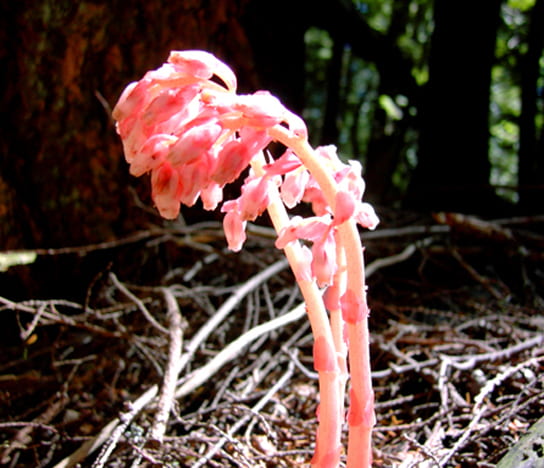
Photo shows a plant with calorie-free pink stems reminiscent of asparagus. Bud-similar appendages grow from the tips of the stems. Saprophytes, like this Dutchmen’southward pipe (Monotropa hypopitys), obtain their nutrient from dead matter and exercise not take chlorophyll. (credit: modification of work by Iwona Erskine-Kellie)
Symbionts
A symbiont is a found in a symbiotic relationship, with special adaptations such equally mycorrhizae or nodule formation. Fungi as well form symbiotic associations with blue-green alga and light-green algae (called lichens). Lichens tin can sometimes exist seen every bit colorful growths on the surface of rocks and copse. The algal partner (phycobiont) makes food autotrophically, some of which it shares with the fungus; the fungal partner (mycobiont) absorbs water and minerals from the environment, which are made bachelor to the green alga. If 1 partner was separated from the other, they would both die.
Epiphytes
An epiphyte is a constitute that grows on other plants, merely is not dependent upon the other plant for nutrition. Epiphytes have two types of roots: clinging aerial roots, which absorb nutrients from humus that accumulates in the crevices of trees; and aerial roots, which absorb wet from the atmosphere.
Insectivorous Plants
An insectivorous plant has specialized leaves to attract and digest insects. The Venus flytrap is popularly known for its insectivorous mode of nutrition, and has leaves that work as traps. The minerals it obtains from casualty compensate for those lacking in the boggy (low pH) soil of its native Northward Carolina coastal plains. There are three sensitive hairs in the middle of each half of each leaf. The edges of each leaf are covered with long spines. Nectar secreted past the plant attracts flies to the leaf. When a fly touches the sensory hairs, the leafage immediately closes. Next, fluids and enzymes break down the casualty and minerals are absorbed by the leaf. Since this plant is popular in the horticultural trade, it is threatened in its original habitat.

A Venus flytrap has specialized leaves to trap insects. (credit: "Selena Due north. B. H."/Flickr)
Nutritional Needs and Adaptations in Animals
The data below was adapted from OpenStax Biology 34.0, OpenStax Biology 34.one OpenStax Biology 34.2
Almost animals obtain their nutrients past the consumption of other organisms. At the cellular level, the biological molecules necessary for animal part are amino acids, lipid molecules, nucleotides, and elementary sugars. Nonetheless, the nutrient consumed consists of protein, fat, and complex carbohydrates. Animals must catechumen these macromolecules into the elementary molecules required for maintaining cellular functions, such as assembling new molecules, cells, and tissues. The conversion of the food consumed to the nutrients required is a multi-footstep process involving digestion and absorption. During digestion, food particles are broken downwardly to smaller components, and afterwards, they are absorbed by the body.
Animals obtain their diet from the consumption of other organisms. Depending on their diet, animals can be classified into the post-obit categories: plant eaters (herbivores), meat eaters (carnivores), and those that eat both plants and animals (omnivores). The nutrients and macromolecules present in food are not immediately accessible to the cells. There are a number of processes that alter nutrient within the fauna trunk in order to make the nutrients and organic molecules accessible for cellular part. Every bit animals evolved in complexity of class and function, their digestive systems have also evolved to accommodate their various dietary needs.
Herbivores, Omnivores, and Carnivores
Herbivores are animals whose primary food source is plant-based. Examples of herbivores, as shown below, include vertebrates like deer, koalas, and some bird species, also as invertebrates such as crickets and caterpillars. These animals have evolved digestive systems capable of handling large amounts of plant cloth. Herbivores tin can be further classified into frugivores (fruit-eaters), granivores (seed eaters), nectivores (nectar feeders), and folivores (leafage eaters).
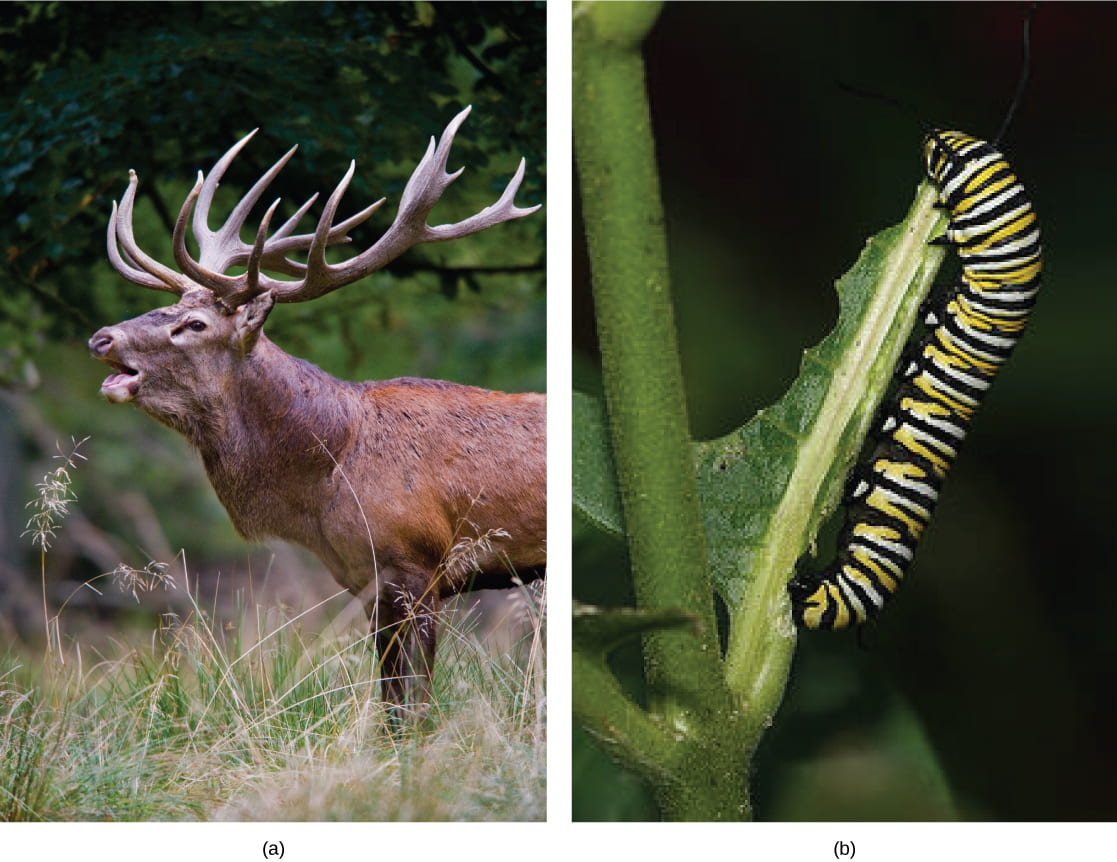
Herbivores, like this (a) mule deer and (b) monarch caterpillar, eat primarily plant material. (credit a: modification of work by Bill Ebbesen; credit b: modification of work past Doug Bowman)
Carnivores are animals that swallow other animals. The word carnivore is derived from Latin and literally means "meat eater." Wild cats such as lions and tigers are examples of vertebrate carnivores, as are snakes and sharks, while invertebrate carnivores include body of water stars, spiders, and ladybugs. Obligate carnivores are those that rely entirely on brute mankind to obtain their nutrients; examples of obligate carnivores are members of the cat family, such as lions and cheetahs. Facultative carnivores are those that as well eat non-animal food in improver to animal food. Note that in that location is no clear line that differentiates facultative carnivores from omnivores; dogs would be considered facultative carnivores.
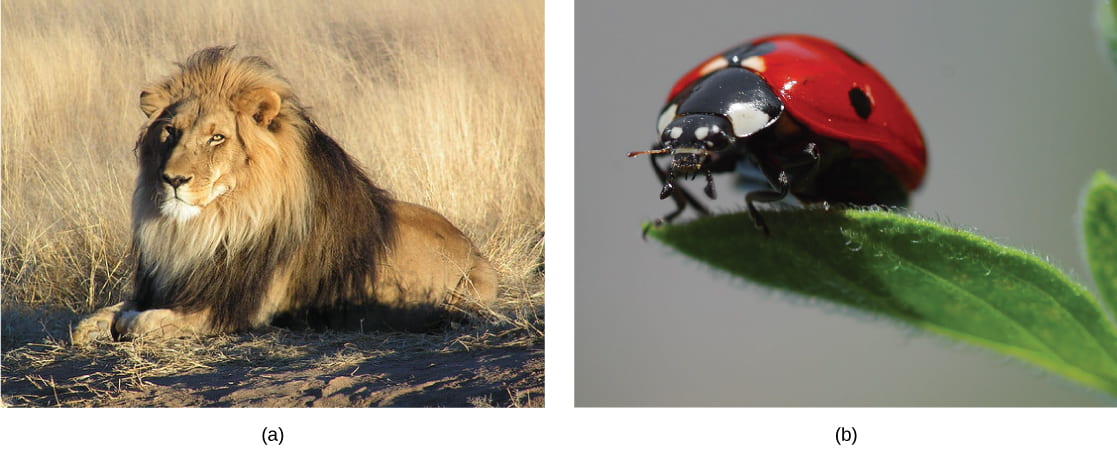
Carnivores like the (a) panthera leo eat primarily meat. The (b) ladybug is besides a carnivore that consumes pocket-sized insects called aphids. (credit a: modification of work past Kevin Pluck; credit b: modification of work by Jon Sullivan)
Â
Omnivores are animals that eat both constitute- and animate being-derived nutrient. In Latin, omnivore means to consume everything. Humans, bears and chickens are example of vertebrate omnivores; invertebrate omnivores include cockroaches and crayfish.
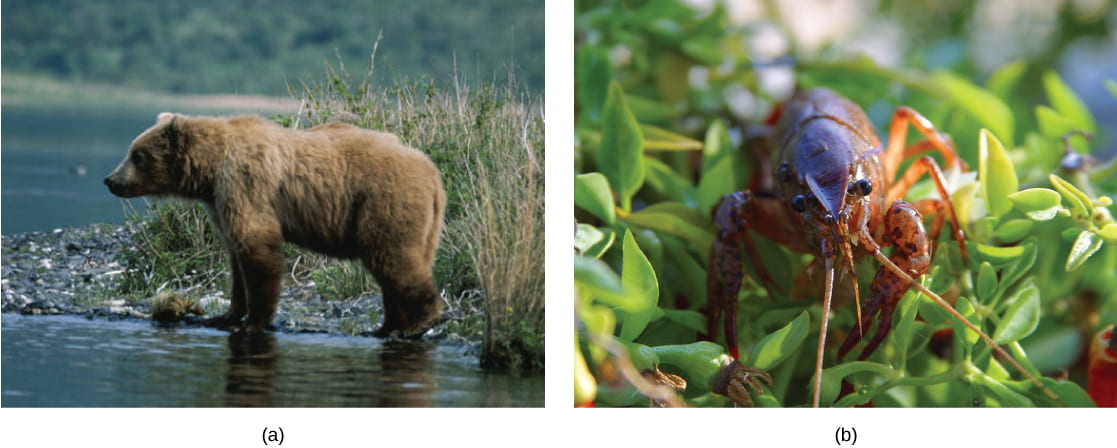
Omnivores like the (a) bear and (b) crayfish consume both institute- and animal-based nutrient. (credit a: modification of work by Dave Menke; credit b: modification of work by Jon Sullivan)
Animal Nutritional Requirements (Homo Focus)
Organic Precursors
The organic molecules required for building cellular material and tissues must come from nutrient. Carbohydrates or sugars are the main source of organic carbons in the animal body. During digestion, digestible carbohydrates are ultimately broken down into glucose and used to provide free energy through metabolic pathways. Complex carbohydrates, including polysaccharides, tin can be broken downwards into glucose through biochemical modification; withal, humans do not produce the enzyme cellulase and lack the ability to derive glucose from the polysaccharide cellulose. In humans, these molecules provide the fiber required for moving waste through the large intestine and a good for you colon. The intestinal flora in the human being gut are able to excerpt some nutrition from these plant fibers. The excess sugars in the body are converted into glycogen and stored in the liver and muscles for later use. Glycogen stores are used to fuel prolonged exertions, such as long-distance running, and to provide free energy during food shortage. Excess glycogen can be converted to fats, which are stored in the lower layer of the peel of mammals for insulation and energy storage. Excess digestible carbohydrates are stored by mammals in order to survive famine and assist in mobility.
Another important requirement is that of nitrogen. Poly peptide catabolism provides a source of organic nitrogen. Amino acids are the building blocks of proteins and protein breakdown provides amino acids that are used for cellular part. The carbon and nitrogen derived from these get the edifice block for nucleotides, nucleic acids, proteins, cells, and tissues. Excess nitrogen must be excreted as it is toxic. Fats add flavour to nutrient and promote a sense of satiety or fullness. Fatty foods are also significant sources of energy because one gram of fat contains nine calories. Fats are required in the diet to aid the absorption of fat-soluble vitamins and the production of fat-soluble hormones.
Essential Nutrients
While the animal body tin synthesize many of the molecules required for function from the organic precursors, there are some nutrients that need to be consumed from food. These nutrients are termed essential nutrients, meaning they must be eaten, and the body cannot produce them.
The omega-3 alpha-linolenic acid and the omega-6 linoleic acid are essential fatty acids needed to brand some membrane phospholipids. Vitamins are some other form of essential organic molecules that are required in small quantities for many enzymes to function and, for this reason, are considered to be co-enzymes. Absenteeism or low levels of vitamins can have a dramatic effect on health, as outlined in the tables beneath. Both fat-soluble and water-soluble vitamins must be obtained from food. Minerals are inorganic essential nutrients that must be obtained from food. Among their many functions, minerals assistance in structure and regulation and are considered co-factors. Certain amino acids too must be procured from nutrient and cannot exist synthesized by the body. These amino acids are the “essential†amino acids. The human body can synthesize just xi of the 20 required amino acids; the rest must be obtained from nutrient in the form of protein. When eaten, proteins are broken down into their amino acrid building blocks and are then used almost immediately to synthesize new proteins needed by the body. The essential amino acids are listed beneath (notation, you are not required to memorize vitamins and minerals included in these tables).
| Water-soluble Essential Vitamins | |||
|---|---|---|---|
| Vitamin | Role | Deficiencies Can Lead To | Sources |
| Vitamin Bi (Thiamine) | Needed by the body to procedure lipids, proteins, and carbohydrates Coenzyme removes COii from organic compounds | Musculus weakness, Beriberi: reduced center function, CNS problems | Milk, meat, dried beans, whole grains |
| Vitamin B2 (Riboflavin) | Takes an active role in metabolism, aiding in the conversion of nutrient to energy (FAD and FMN) | Cracks or sores on the outer surface of the lips (cheliosis); inflammation and redness of the tongue; moist, scaly skin inflammation (seborrheic dermatitis) | Meat, eggs, enriched grains, vegetables |
| Vitamin B3 (Niacin) | Used by the torso to release energy from carbohydrates and to process alcohol; required for the synthesis of sex hormones; component of coenzyme NAD+ and NADP+ | Pellagra, which can result in dermatitis, diarrhea, dementia, and death | Meat, eggs, grains, nuts, potatoes |
| Vitamin B5 (Pantothenic acid) | Assists in producing free energy from foods (lipids, in particular); component of coenzyme A | Fatigue, poor coordination, retarded growth, numbness, tingling of easily and anxiety | Meat, whole grains, milk, fruits, vegetables |
| Vitamin B6 (Pyridoxine) | The principal vitamin for processing amino acids and lipids; as well helps convert nutrients into energy | Irritability, depression, confusion, mouth sores or ulcers, anemia, muscular twitching | Meat, dairy products, whole grains, orange juice |
| Vitamin B7 (Biotin) | Used in energy and amino acid metabolism, fat synthesis, and fat breakdown; helps the body use blood sugar | Hair loss, dermatitis, depression, numbness and tingling in the extremities; neuromuscular disorders | Meat, eggs, legumes and other vegetables |
| Vitamin B9 (Folic acid) | Assists the normal evolution of cells, especially during fetal evolution; helps metabolize nucleic and amino acids | Deficiency during pregnancy is associated with nativity defects, such as neural tube defects and anemia | Leafy dark-green vegetables, whole wheat, fruits, nuts, legumes |
| Vitamin B12 (Cobalamin) | Maintains healthy nervous system and assists with blood jail cell germination; coenzyme in nucleic acid metabolism | Anemia, neurological disorders, numbness, loss of remainder | Meat, eggs, animal products |
| Vitamin C (Ascorbic acid) | Helps maintain connective tissue: os, cartilage, and dentin; boosts the immune system | Scurvy, which results in bleeding, pilus and molar loss; joint pain and swelling; delayed wound healing | Citrus fruits, broccoli, tomatoes, scarlet sweet bell peppers |
| Fat-soluble Essential Vitamins | |||
|---|---|---|---|
| Vitamin | Part | Deficiencies Can Lead To | Sources |
| Vitamin A (Retinol) | Disquisitional to the development of basic, teeth, and skin; helps maintain eyesight, enhances the immune system, fetal development, gene expression | Night-blindness, skin disorders, impaired immunity | Dark light-green leafy vegetables, yellow-orangish vegetables fruits, milk, butter |
| Vitamin D | Critical for calcium assimilation for bone development and force; maintains a stable nervous system; maintains a normal and stiff heartbeat; helps in blood clotting | Rickets, osteomalacia, amnesty | Cod liver oil, milk, egg yolk |
| Vitamin Eastward (Tocopherol) | Lessens oxidative damage of cells, and prevents lung damage from pollutants; vital to the immune arrangement | Deficiency is rare; anemia, nervous system degeneration | Wheat germ oil, unrefined vegetable oils, nuts, seeds, grains |
| Vitamin Thousand (Phylloquinone) | Essential to claret clotting | Haemorrhage and easy bruising | Leafy green vegetables, tea |
| Minerals and Their Function in the Human Trunk | |||
|---|---|---|---|
| Mineral | Role | Deficiencies Can Atomic number 82 To | Sources |
| *Calcium | Needed for muscle and neuron function; eye wellness; builds bone and supports synthesis and function of blood cells; nerve function | Osteoporosis, rickets, musculus spasms, dumb growth | Milk, yogurt, fish, green leafy vegetables, legumes |
| *Chlorine | Needed for production of muriatic acid (HCl) in the stomach and nerve function; osmotic residue | Musculus cramps, mood disturbances, reduced appetite | Table table salt |
| Copper (trace amounts) | Required component of many redox enzymes, including cytochrome c oxidase; cofactor for hemoglobin synthesis | Copper deficiency is rare | Liver, oysters, cocoa, chocolate, sesame, nuts |
| Iodine | Required for the synthesis of thyroid hormones | Goiter | Seafood, iodized salt, dairy products |
| Iron | Required for many proteins and enzymes, notably hemoglobin, to preclude anemia | Anemia, which causes poor concentration, fatigue, and poor immune role | Red meat, leafy dark-green vegetables, fish (tuna, salmon), eggs, dried fruits, beans, whole grains |
| *Magnesium | Required co-factor for ATP germination; bone germination; normal membrane functions; muscle role | Mood disturbances, musculus spasms | Whole grains, leafy green vegetables |
| Manganese (trace amounts) | A cofactor in enzyme functions; trace amounts are required | Manganese deficiency is rare | Mutual in nearly foods |
| Molybdenum (trace amounts) | Acts every bit a cofactor for three essential enzymes in humans: sulfite oxidase, xanthine oxidase, and aldehyde oxidase | Molybdenum deficiency is rare | |
| *Phosphorus | A component of bones and teeth; helps regulate acrid-base residuum; nucleotide synthesis | Weakness, bone abnormalities, calcium loss | Milk, hard cheese, whole grains, meats |
| *Potassium | Vital for muscles, middle, and nerve part | Cardiac rhythm disturbance, muscle weakness | Legumes, tater peel, tomatoes, bananas |
| Selenium (trace amounts) | A cofactor essential to activeness of antioxidant enzymes similar glutathione peroxidase; trace amounts are required | Selenium deficiency is rare | Common in most foods |
| *Sodium | Systemic electrolyte required for many functions; acid-base remainder; water balance; nerve role | Muscle cramps, fatigue, reduced appetite | Tabular array salt |
| Zinc (trace amounts) | Required for several enzymes such as carboxypeptidase, liver alcohol dehydrogenase, and carbonic anhydrase | Anemia, poor wound healing, tin lead to brusk stature | Common in nigh foods |
| *Greater than 200mg/twenty-four hour period required | |||
| Essential Amino Acids | |
|---|---|
| Amino acids that must be consumed | Amino acids anabolized by the torso |
| isoleucine | alanine |
| leucine | selenocysteine |
| lysine | aspartate |
| methionine | cysteine |
| phenylalanine | glutamate |
| tryptophan | glycine |
| valine | proline |
| histidine* | serine |
| threonine | tyrosine |
| arginine* | asparagine |
| *The human trunk can synthesize histidine and arginine, just not in the quantities required, especially for growing children. | |
This video provides a summary of human being nutrition needs:
Source: https://organismalbio.biosci.gatech.edu/nutrition-transport-and-homeostasis/nutrition-needs-and-adaptations/
Posted by: youngthadders.blogspot.com
0 Response to "Where Do Plants And Animals Get Their Energy"
Post a Comment